Optimizing Modern Web Performance & Core Web Vitals
Actionable engineering techniques to achieve 100/100 Lighthouse scores, sub-second LCP, zero layout shift (CLS), and minimal interaction latency (INP).

Medhawa Neranjan
Software Developer
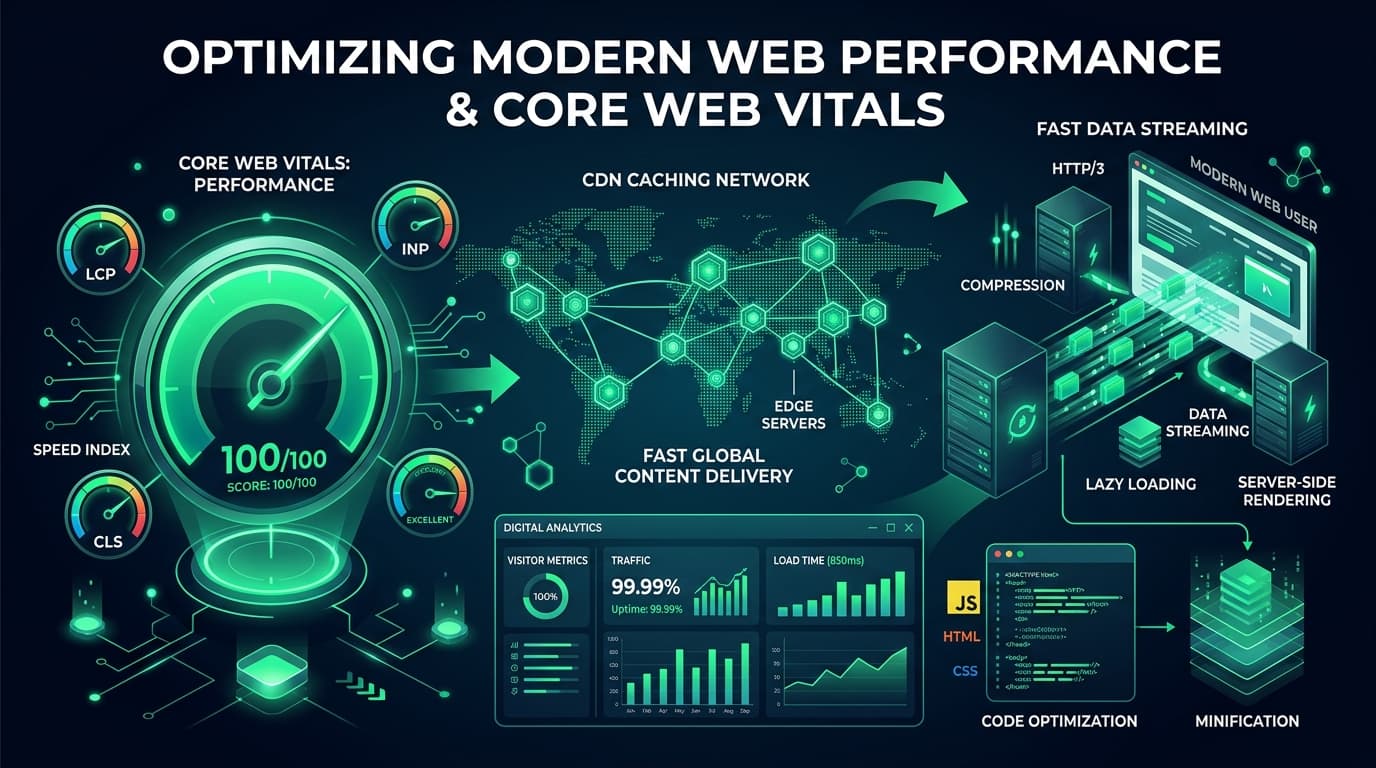
Page speed directly correlates with user conversion and search engine discoverability. Optimizing for Google's Core Web Vitals requires a holistic approach spanning asset compression, font loading, critical CSS, and edge caching.
1. Largest Contentful Paint (LCP) Optimization
Preload hero images with fetchpriority="high", utilize modern AVIF/WebP formats, and deliver assets via global CDN edge networks to maintain LCP under 1.2 seconds.
2. Eliminating Cumulative Layout Shift (CLS)
Always declare explicit aspect ratios for dynamic media, reserve space for asynchronous embeds, and avoid font-swapping layout jolts with font-display: swap adjustments.
3. Minimizing Interaction to Next Paint (INP)
Break up long tasks on the main thread using scheduler.yield(), defer non-critical analytics scripts, and keep user interactions snappy and responsive.
Written by Medhawa Neranjan
Full Stack Developer & Founder of Codezpec Technologies. Passionate about building robust web and mobile software with Next.js, Flutter, and TypeScript.
Recommended Articles
Architecting High-Performance Next.js 16 Applications with Turbopack
A comprehensive guide to leveraging Next.js 16 App Router, React Server Components (RSC), Turbopack compiler, and streaming SSR for sub-second page loads.
Mastering TypeScript Generics and Enterprise Type Safety
How to design reusable, flexible, and bulletproof TypeScript APIs using generic constraints, mapped types, and conditional typing.